Did you know? Corporate sponsors like working with small brands and small businesses just as much as they like working with big ones? One of the things I’ve learned as a sales trainer and sponsorship expert over the years is that corporate sponsors are not simply looking for the biggest brands to do business with—they are also looking for opportunities to work with smaller brands, small businesses, influencers and micro business owners.
The decision makers at the corporation are seeking opportunities that deliver value, visibility, credibility, and access to the right audience. Your job as a small business owner, micro business owner, entrepreneur, influencer, etc…, is to make your business look like an opportunity worth pursuing. Your goal should be showing the sponsor how there is alignment between who your audience and who their audience is. It’s practically that simple.
If you need more proof, according to
Creator Commerce, Corporate brands are beginning to collaborate with smaller brands to refresh their inventory, capture trends, and increase consumer engagement. When it comes to higher engagement and order value:
Co-branding partnerships between established corporations and smaller, trending brands generate 3x higher engagement and a 40% greater Average Order Value (AOV) compared to traditional single-brand marketing campaigns.
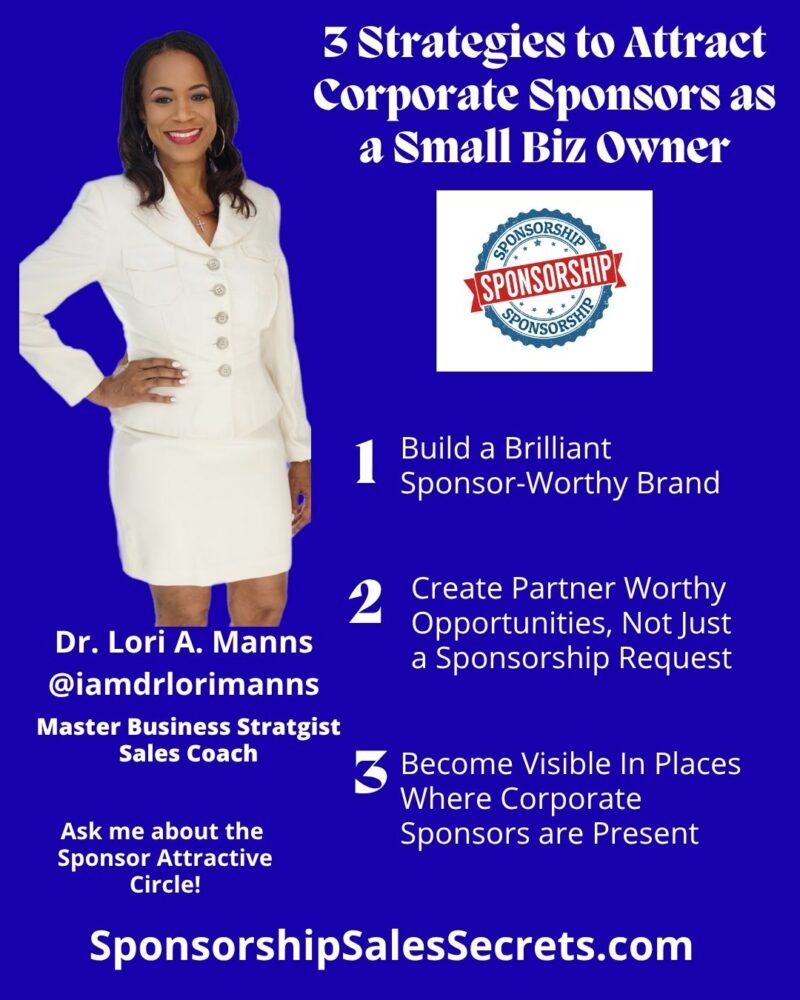
Here are three strategies that can help smaller brands, influencers, and entrepreneurs get on the radar of corporate decision-makers.
1. Build a Brilliant, Credible, Sponsor-Worthy Personal Brand
Your credibility matters. Your authority matters. You must demonstrate your experience in a particular industry as an expert. Before a corporation invests money in your business, it wants to know that you have influence, credibility, and a clear audience. You don’t need millions of followers. You need an engaged audience that trusts you and one that engages with your brand.
Position yourself as an expert by consistently sharing useful content, industry insights, customer success stories, behind-the-scenes experiences, and original opinions.
Example: A small fitness entrepreneur could regularly post educational videos about workplace wellness, then create a corporate wellness proposal showing how their expertise could help companies improve employee engagement and limit employee absenteeism.
The goal is to make sponsors think, “This person is a professional and already has the audience and credibility we want to reach.”
2. Create a Partnership Opportunity, Not Just a Sponsorship Request
Keep in mind, the big corporations aka corporate sponsors don’t need you, the small guy. So yes, they care about “supporting the community” but not that much. By that I mean, they aren’t just looking for small businesses they can throw money at without a return. One of the biggest sales mistakes small businesses make is approaching corporations with, “Can you sponsor /us?”
Instead, approach them with, “Here is how we can help you achieve your goals.” Or “Here is how our event helps you to reach a new but aligned audience.”
Research potential sponsors and understand what they care about.
And the things they care about most are brand awareness, community engagement, customer acquisition, diversity initiatives, employee engagement, or reaching a particular demographic. Then build a partnership around those objectives.
Example: A small wardrobe stylist hosting a community event might approach a financial-services company with an opportunity to sponsor a financial-literacy session for entrepreneurs in the fashion industry. The corporation receives meaningful exposure while demonstrating community involvement.
You aren’t asking for money. You’re presenting a business solution. The business solution helps the corporation to reach a niche audience of small business owners that may need their services.
3. Become Visible Where Corporate Decision-Makers Are Showing Up
If you want corporations to seek you out, your brand needs to be discoverable.
LinkedIn is particularly valuable for this. Share accomplishments, partnerships, media coverage, customer results, speaking engagements, and industry insights. Tag relevant companies when appropriate, participate in conversations, and network with marketing, partnership, sponsorship, and community-relations professionals.
Example: A small technology company that consistently publishes thought leadership about AI could attract the attention of a larger technology firm looking for innovative partners.
Visibility creates familiarity, and familiarity reduces the perceived risk of doing business with a smaller company.
If a sponsor never sees you, your brand, your content, or otherwise, how will they discover you? You can’t afford to rely on word-of-mouth. In the digital world we live in, you must be searchable on-line.
In summary, here’s the MVP Sales Lesson: Stay Visible. Keep your brand out there.
Don’t disappear online after you make a sale or land an opportunity. Visibility is an ongoing sales strategy.
Keep publishing valuable content. Celebrate wins. Showcase customer results. Comment intelligently on industry conversations. Update your website and social profiles. Find the appropriate decision-makers and make connections. Why? Because corporate opportunities often happen when you aren’t actively selling or seeking them.
I am a testament to the fact that people are always watching you, but you may never know it. I’ve had event producers and planners to follow me online for months and then reach out with an email or a phone call out of the blue with an invitation to partner.
A marketing executive may discover your content today, follow you for six months, and contact you when the right partnership opportunity appears. The question is, “will you be ready?” As the saying goes….stay ready so that when the time comes, you don’t have to get ready.
Small brands don’t have to outspend corporations to get noticed. They need to out-position, out-communicate, and out-engage their competition.
The objective isn’t simply to chase sponsors. It’s to build a brand that makes sponsors think, “We should be working with them.” It’s called sponsor attraction.
Want to learn how I teach my clients in depth sales strategies to attract corporate sponsors? JOIN ONE OF MY SPONSORSHIP PROGRAMS. LEARN MORE HERE.
##########
This article was written by Dr. Lori A. Manns, President of Quality Media Consultant Group LLC.
Want to use this article in your blog on on your website? Here’s the author box you must include.
Dr. Lori A. Manns, CEO of Quality Media Consultant Group, a business consultancy firm specializing in advertising, media and sales solutions for your optimal success. Dr. Lori is the founder of Trailblazer Business Academy; ™ where purpose-driven entrepreneurs go to learn next level strategies to grow their businesses as well as, the Sponsorship Sales Secrets System; ™ that shows you how to get more sponsors and sales for your business, guaranteed. To book consultancy services on marketing, advertising/media, or sales and learn how to increase your revenue and grow your business; please visit www.qualitymediaconsultants.com
Join our newsletter list, and be amount thousands of business owners to get free tips, tools and resources to grow your business. Plus just for joining our newsletter, you get a gift, to help you learn the critical mistakes you could be making in the sales process. www.qualitymediaconsultants.com