
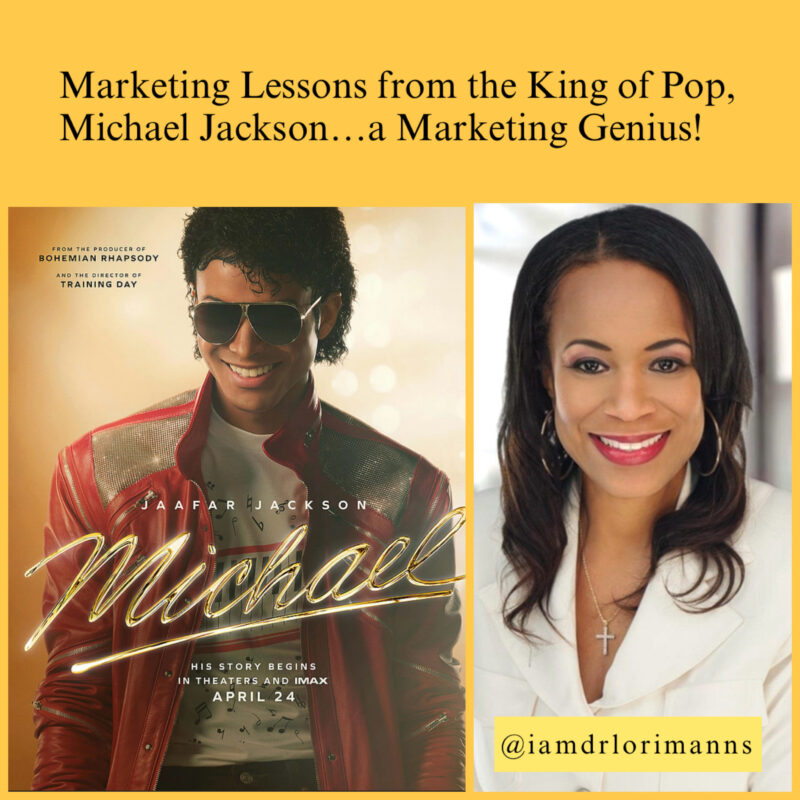
created by photogrid
I love movies, always have. I especially love movies based on real life stories of people whose artistry I admire. That’s why I had to go see the Michael movie opening weekend last week. And apparently millions of other people around the world felt the same way.
According to Variety, “Michael,” a biopic from Lionsgate about the King of Pop, Michael Jackson, arrived in theaters as an instant sensation with $97 million domestically and $217 million globally in its first weekend of release.
As I watched the movie, I realized just how truly talented Michael Jackson was. Not only was he a great performer, dancer, and songwriter, but he was a marketing genius. After he became a solo artist, he took his career to worldwide fame. The album that made Michael a global icon was Thriller.
Michael Jackson didn’t just release Thriller—he engineered a cultural takeover. And as Hollywood revisits his life through a new biopic, it’s worth examining not just the legend, but the strategy behind his global success. Because what propelled Jackson to become the biggest pop artist of the 1980s wasn’t luck or raw talent alone—it was a calculated, multi-channel marketing blueprint that today’s business leaders would recognize instantly.
Step 1. Choose the right media outlet and use it as the marketing vehicle to drive your project or whatever you’re selling. This is what Michael did with the Thriller album.
Step 2. Leverage Live Cultural Events and use them to create buzz, word of mouth as well as instant fans and followers.
Step 3. Incorporate Video as a the marketing tactic to tell a story. This is what Michael did with Billie Jean video it wasn’t just a video, the production was a short story.
Below, I’ve outlined how each strategy was pure marketing genius and how we might be able to glean from the mastermind that was Michael Jackson.
The Blueprint Behind Thriller
By the early 1980s, the music industry was undergoing a seismic shift. MTV had launched in 1981, but its programming leaned heavily toward rock acts, leaving Black artists largely excluded. Jackson saw what others didn’t: MTV wasn’t just a channel—it was the channel. A visual pipeline into millions of homes.
He pushed—relentlessly—through his management and label to secure airtime on MTV. This wasn’t a passive request; it was strategic pressure. Jackson understood that visibility drives familiarity, and familiarity drives demand. When “Billie Jean” finally entered rotation, it didn’t just perform—it redefined who could dominate the platform. And Michael did just that. From that point on, he dominated every video oriented program on TV at the time.
The Motown 25 Moment: Event Marketing Before It Was a Buzzword
Then came 1983’s Motown 25th Anniversary special. Jackson didn’t just perform—he created a moment. Debuting the moonwalk during “Billie Jean,” he turned a televised appearance into a global event.
From a marketing perspective, this was masterful. It combined scarcity (a one-time performance), spectacle (never-before-seen choreography), and emotional resonance (nostalgia tied to Motown’s legacy). Today, brands call this “event-based marketing.” Jackson simply called it Tuesday.
Long-Form Video: Storytelling as a Sales Engine
Perhaps the most overlooked—but most revolutionary—move was Jackson’s use of long-form video. The “Billie Jean” and later “Thriller” videos weren’t just promotional clips; they were cinematic experiences.
At a time when most music videos were straightforward performance pieces, Jackson leaned into narrative. He understood that storytelling deepens engagement. Viewers weren’t just listening—they were watching, feeling, and remembering.
This is the essence of high-touch marketing: creating immersive, emotionally rich experiences that forge a connection beyond the transaction.
High-Touch Marketing Before the Digital Age
Jackson’s strategy was layered:
- Mass visibility (MTV placement)
- Cultural moments (Motown 25 performance)
- Emotional storytelling (long-form videos)
Each touchpoint reinforced the other. This wasn’t random promotion—it was an integrated campaign designed to maximize exposure while deepening audience loyalty.
The result? Thriller didn’t just sell—it dominated. It became the best-selling album of all time, not just because people heard it, but because they experienced it repeatedly across multiple channels.
The Modern Lesson: Visibility + Experience = Loyalty
Today’s business landscape is noisier, faster, and more fragmented. But the underlying principle hasn’t changed: the brands that win are the ones that create meaningful, memorable interactions.
Jackson didn’t rely on a single tactic. He built an ecosystem of engagement. His marketing strategy was a mix of everything that mattered at that moment in time.
Three Takeaways for Today’s Business Owners
- Go Where Attention Lives—Even If You Have to Fight for It Jackson didn’t wait for MTV to welcome him; he forced the issue. Identify the platforms where your audience spends time and commit to showing up there—even if it requires persistence or unconventional thinking.
- Create Moments, Not Just Messages The Motown 25 performance wasn’t just promotion—it was an experience people talked about for decades. Think beyond ads and posts. What can you create that people will remember and share long after you’ve done it?
- Invest in Storytelling That Feels Premium Jackson’s long-form videos elevated his brand. In today’s terms, that’s high-quality content—video, narrative, and design that reflects intention and craftsmanship. Customers are drawn to brands that feel substantial.
In the end, Thriller wasn’t just an album—it was a masterclass in marketing orchestration. The 2026 biopic, Michael may dramatize the man, but the real story worth studying is the strategy behind his global dominance. Michael Jackson’s rise to world-wide fame and musical success teaches us to never underestimate the hard work that goes into building a career and becoming a global figure.
##########
This article was written by Dr. Lori A. Manns, President of Quality Media Consultant Group LLC.
Want to use this article in your blog on on your website? Here’s the author box you must include.
Dr. Lori A. Manns, CEO of Quality Media Consultant Group, a business consultancy firm specializing in advertising, media and sales solutions for your optimal success. Dr. Lori is the founder of Trailblazer Business Academy; ™ where purpose-driven entrepreneurs go to learn next level strategies to grow their businesses as well as, the Sponsorship Sales Secrets System; ™ that shows you how to get more sponsors and sales for your business, guaranteed. To book consultancy services on marketing, advertising/media, or sales and learn how to increase your revenue and grow your business; please visit www.qualitymediaconsultants.com
Join our newsletter list, and be amount thousands of business owners to get free tips, tools and resources to grow your business. Plus just for joining our newsletter, you get a gift, to help you learn the critical mistakes you could be making in the sales process. www.qualitymediaconsultants.com